
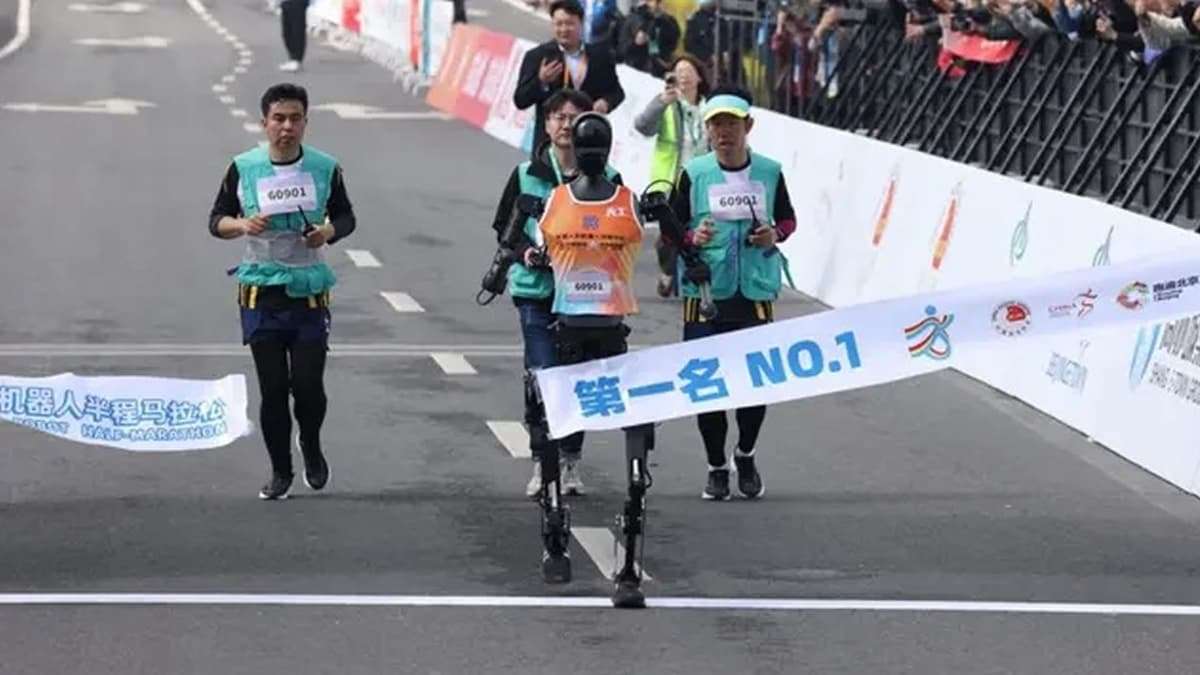
Can Humanoids Beat Humans in a Marathon Race?
Can Robots Outrun Humans in a Marathon?
Have you ever wondered if robots could beat humans in a marathon race? With the advancements in technology, humanoids are becoming more sophisticated and agile. But can they really outperform the speed and endurance of a human runner? Let’s dive into this fascinating topic and explore the potential of humanoids in the world of marathon racing.
The Human vs. Robot Marathon Challenge
In a recent experiment, researchers pitted a humanoid robot against a professional human runner in a marathon race. The robot was designed to mimic the movements of a human runner, with advanced sensors and algorithms to optimize its performance. However, the results were surprising – the human runner outperformed the robot in speed and endurance.
While the robot showed incredible precision and consistency in its movements, it lacked the intuitive decision-making and adaptability that a human runner possesses. The human runner was able to adjust their pace, energy levels, and strategy based on external factors such as terrain, weather, and competition.
The Limitations of Humanoids in Marathon Racing
One of the main limitations of humanoids in marathon racing is their reliance on pre-programmed algorithms and sensors. While these technologies are highly advanced, they cannot match the real-time decision-making capabilities of the human brain. Human runners have the ability to listen to their body, assess their surroundings, and make split-second decisions that can impact their performance.
Another factor to consider is the physical difference between human runners and humanoids. Human runners have muscle fibers, tendons, and joints that are finely tuned for endurance running. Despite technological advancements in robotics, humanoids still struggle to replicate the complex biomechanics and energy efficiency of the human body.
The Future of Humanoids in Marathon Racing
While humanoids may not be able to outperform humans in a marathon race at the moment, the future holds great potential for technological advancements in robotics. Researchers are constantly working on improving the capabilities of humanoids, from enhancing their agility and strength to developing more advanced AI algorithms for decision-making.
One possible application of humanoids in marathon racing could be as pacemakers or support robots for human runners. These robots could assist runners by providing real-time feedback, analyzing their performance, and adjusting their pace to optimize energy efficiency.
Another potential use of humanoids in marathon racing is in training and rehabilitation. These robots could simulate running conditions, analyze running techniques, and provide personalized coaching to help human runners improve their performance and prevent injuries.
In Conclusion
While humanoids may not be able to beat humans in a marathon race just yet, the ongoing advancements in robotics and AI technology hold great promise for the future. As researchers continue to push the boundaries of what is possible with humanoid robots, we may see a day when robots and humans compete side by side in marathon races – a true test of man and machine.
What do you think about the potential of humanoids in marathon racing? Could robots one day outrun humans in a marathon? Let us know your thoughts in the comments below!
About The Author